The most useful way to judge which notes in a large vault matter is not to read them again, it is to look at how they are connected. A note that many other notes link to, especially notes that are themselves well connected, is almost always more central to your thinking than an isolated one, and you can measure that centrality precisely without opening a single file. This is the same idea that lets a search engine rank pages it has never understood, borrowed and applied to the graph you build every time you write a wiki-link. It is also one of the signals a ranking layer can use to decide which of today’s tasks deserves your attention first.
The intuition is worth stating plainly, because it survives all the mathematics that formalises it: importance flows through links. A note is important if important notes point to it. That sentence looks circular, and it is, productively so, in exactly the way that makes it computable.
Importance is a property of the graph, not the note
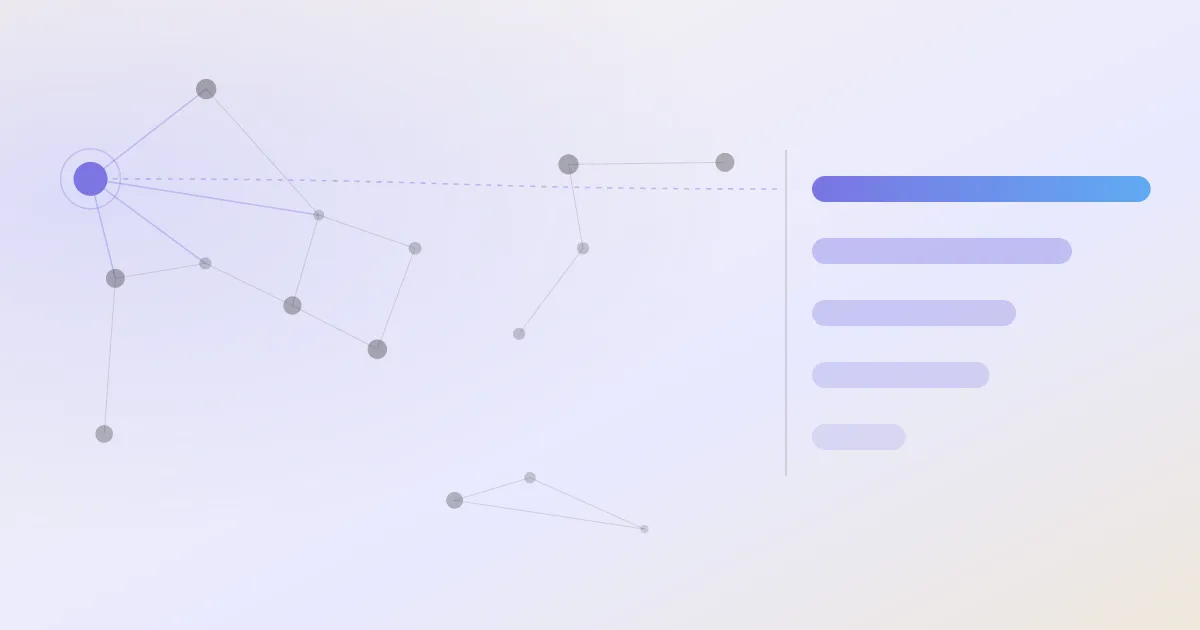
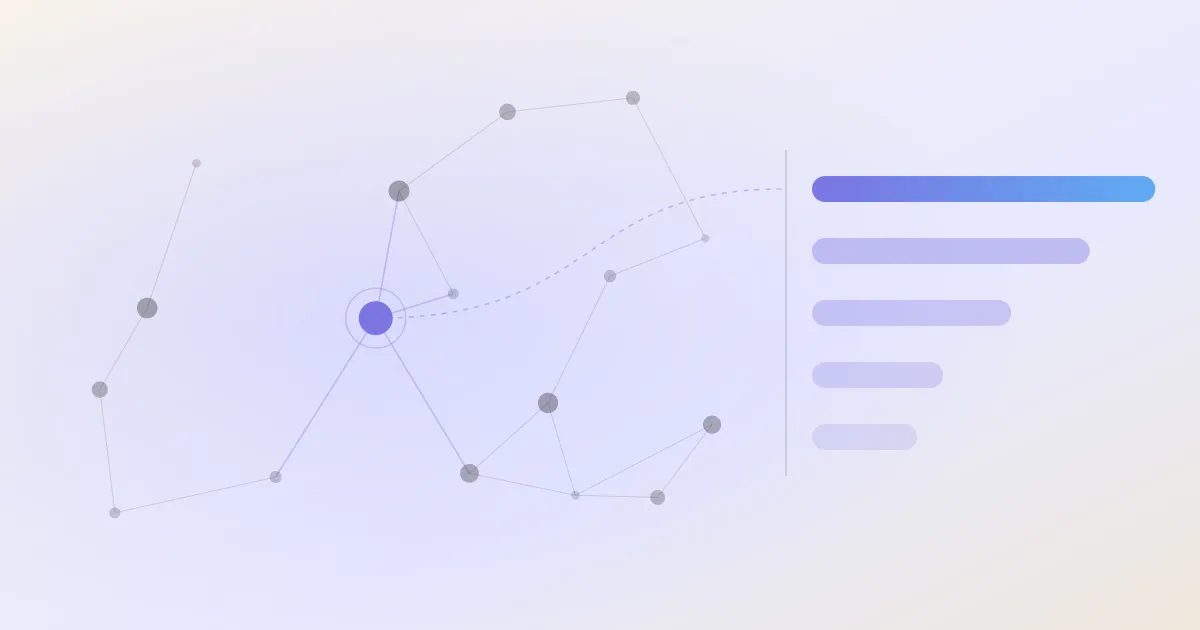
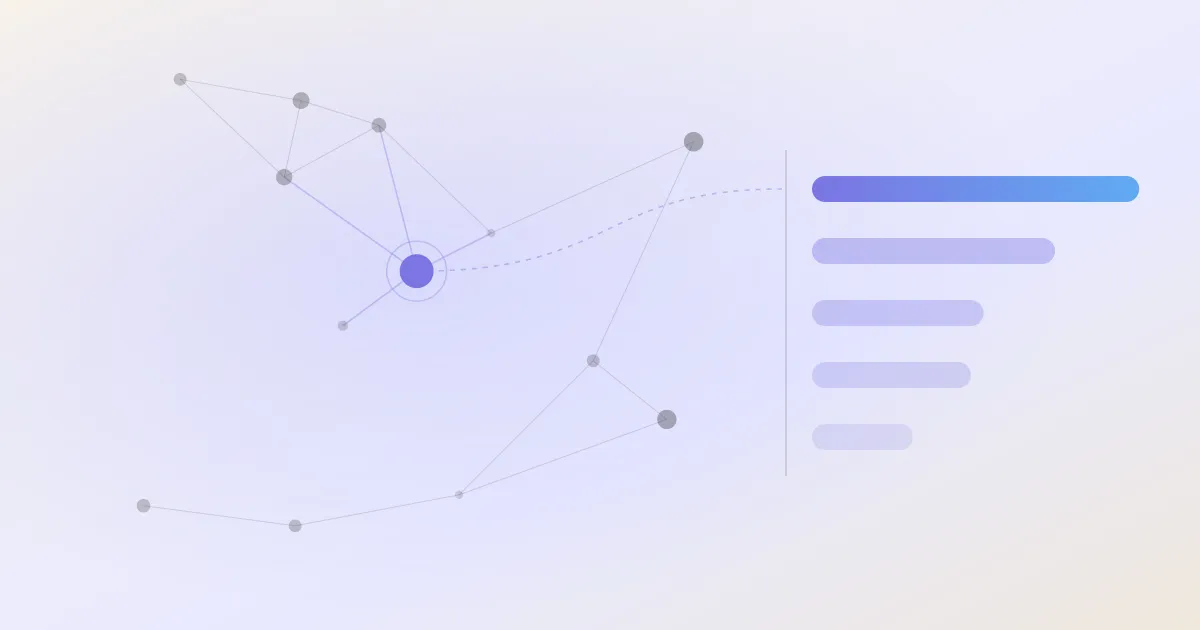
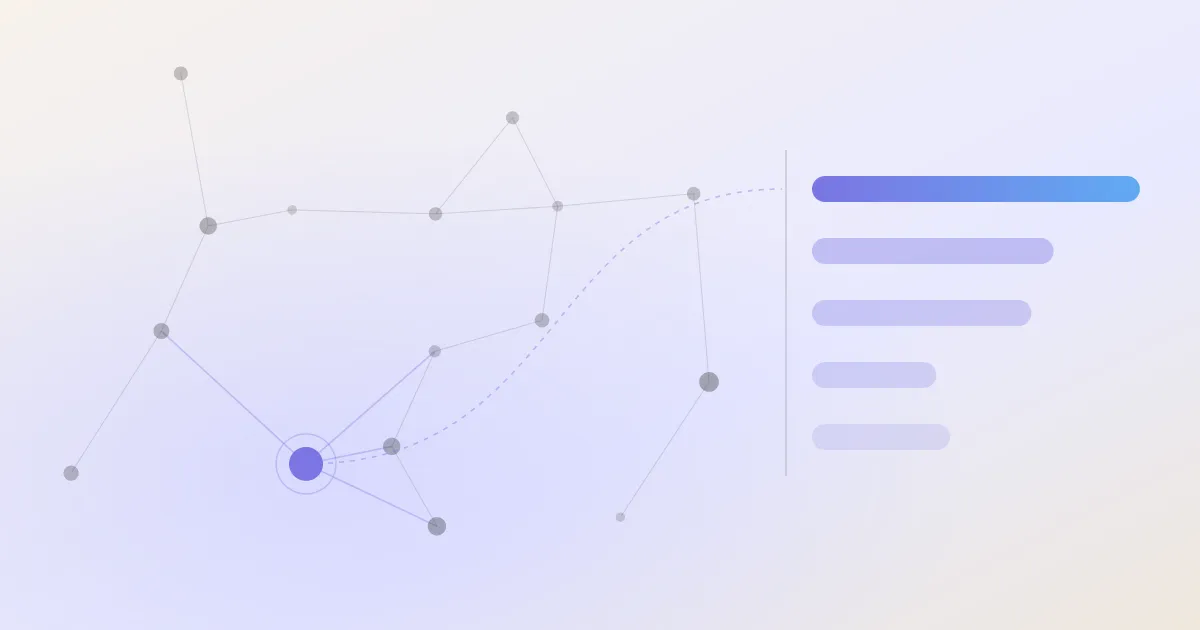
Your vault is a directed graph. Each note is a node; each wiki-link or Markdown link is an edge pointing from one note to another. Most people only ever see this as the graph view, a pretty constellation, and dismiss it as decoration. But the structure carries real information about what you actually work on, and that information is legible to a computer even when the note contents are not.
Consider two notes with identical text length and age. One has forty backlinks from across your projects; the other has none. Without reading either, you already know which is more woven into your work. The backlink count is the crudest version of this signal, and even it is informative. The graph knows things about your priorities that no individual note states, because you encoded those priorities every time you chose to link.
From backlink counts to real centrality
Counting backlinks is a start, but it is easy to fool. A note linked from twenty abandoned daily notes is not as important as one linked from three active project hubs, and raw counts cannot tell them apart. The fix is the idea behind Google’s original ranking: weight each incoming link by the importance of the note it comes from. A link from a central note counts for more than a link from a peripheral one.
This is eigenvector centrality, and the web-scale variant of it is PageRank. Both formalise the circular intuition: a node’s score depends on the scores of the nodes linking to it, solved all at once across the whole graph. As one clear technical explainer of the two measures puts it, the point is that a node connected to important nodes becomes important itself, which is precisely the judgement you make by instinct when you notice a note keeps coming up in the context of work you care about. PageRank is the better fit for a vault because links are directional: you linked from a project note to a reference, and the direction matters.
| Measure | What it weights | Best for |
|---|---|---|
| Backlink count | how many notes link in | a rough first signal, easily inflated |
| Eigenvector centrality | links weighted by the source’s importance | undirected connection strength |
| PageRank | the same, but respecting link direction | a vault, where links point one way |
Applied to notes, this produces what is worth calling note gravity: a score for how much the rest of your vault leans on a given note. A high-gravity note is one your thinking orbits. A task living in a high-gravity note is, all else equal, more likely to matter than the same task stranded in an orphan, and that is a signal a ranking can use directly.
The signals beyond centrality
Centrality is powerful but it is a snapshot, and importance has a time dimension centrality alone misses. A note can be central and dormant, or peripheral and suddenly urgent. A good sense of what matters combines the structural signal with a few temporal ones.
Recency and momentum capture activity: a cluster of notes you have edited every day this week is where your attention already is, and a task there is probably live. Daily-note mentions capture salience: a note or task you keep referencing in your dailies is on your mind, whatever the graph says. Heading context captures intent: a task under “Next actions” reads differently from the same words under “Someday”. None of these requires understanding the prose. They are all structural or positional facts a computer can read, which is what makes them reliable inputs to a deterministic ranking rather than a guess.
| Signal | What it measures | Why it is trustworthy |
|---|---|---|
| Backlink count | raw connectedness | simple, but easily inflated by dead links |
| Note gravity (PageRank-style) | weighted centrality | a link from a central note counts more |
| Cluster momentum | recent edit activity nearby | shows where attention already is |
| Daily-note mentions | salience over recent days | reflects what you keep returning to |
| Heading context | intent of placement | ”Next actions” is not “Someday” |
No single row is the answer. Importance is the combination, and the reason to compute it rather than intuit it is that in a vault of hundreds of notes, your intuition quietly loses track of the graph while the graph does not.
A worked example
Picture two tasks in a mature vault. The first, “draft the onboarding email”, sits in a project note that eleven other active notes link to and that you have edited four times this week. The second, “read that article on CRDTs”, sits in a lone note you clipped a month ago and have not touched since. By raw text they look similar: both are single lines, both undated. By the graph they are worlds apart. The first note has high gravity, sits in a cluster with strong recent momentum, and has been mentioned in three of your last five daily notes. The second is an orphan with no backlinks, no momentum, and no recent mentions.
A centrality-aware ranking reflects that gap without you telling it to. The onboarding task inherits the pull of its well-connected, actively-edited home and rises; the CRDT task, structurally isolated and dormant, sinks toward “someday” where it honestly belongs. Notice what did not happen: nobody read either note’s contents, nobody guessed at meaning, and nothing was invented. The order came entirely from structure you built yourself, one link and one edit at a time, which is exactly why it can be shown back to you as a defensible reason rather than an opaque verdict.
Why compute this instead of just re-reading
The honest objection is that you could just look. For a small vault, that is correct, and adding machinery to measure what you can see at a glance is waste. The case for computing importance appears at scale, and it is the same case as for any instrument: past a certain size, unaided judgement drifts. A vault of 2,000 notes has more links than you could enumerate from memory, and research on fragmented knowledge work found people switch tasks on average every three minutes, which is not the working pattern of someone holding a clear mental model of a large vault’s structure. When you cannot hold the graph in your head, a measure that can becomes genuinely useful, not as an oracle but as a second opinion grounded in structure you built yourself.
This is exactly where note gravity earns its place in a task ranking. A tool deciding what to surface first in a big Obsidian task management setup can weight a task by the centrality of the note it lives in, so work embedded in your most-connected projects rises and work stranded in an orphan does not shout as loudly. Because the score is structural, it can be shown and defended rather than asserted, which matters for why your task app should explain itself.
Where the graph misleads
Centrality is a strong signal, not a perfect one, and treating it as gospel produces its own failures. A hub note you link reflexively, a daily-note template, a tag index, can accumulate huge centrality while meaning nothing about priority, so a naive ranker over-weights plumbing. Brand-new notes have no backlinks yet and will be under-rated exactly when they might be most urgent. And a deliberately atomic zettelkasten, where notes are many and lightly linked, produces a flatter graph where centrality separates things less cleanly. A ranking that leans only on the graph inherits all of these blind spots, which is the practical reason to combine centrality with recency, salience and explicit priority rather than crowning it alone.
Key takeaways: measuring what matters in a vault
Judge a note’s importance by its place in your link graph, because a note that well-connected notes point to is almost always more central to your thinking than an isolated one, and you can measure that without rereading anything. Move past raw backlink counts to a PageRank-style note gravity that weights each link by the importance of its source. Then combine that structural signal with recency, daily-note salience, and heading context, since importance has a time dimension centrality alone misses, and guard against the graph’s blind spots, hub notes, fresh notes, and flat zettelkasten graphs. The payoff is a measure of what matters that scales past the point where your own sense of the vault quietly stops keeping up.
Quick answers
What makes one note more important than another?
How it sits in your link graph, more than what it says. A note that many other notes link to, especially notes that are themselves well connected, is almost always more central to your thinking than an isolated one. You can measure this centrality directly from the links you already wrote, without rereading anything. Combined with how recently the surrounding notes were edited and how often the note comes up in your dailies, it gives a reliable sense of importance.
How can software measure a note’s importance without reading it?
By treating the vault as a graph and scoring each note’s centrality. The links between notes carry information about your priorities that no single note states, and measures like PageRank weight each incoming link by the importance of the note it comes from. That produces a note-gravity score purely from structure, so the software never has to interpret your prose, which is what makes the signal reliable rather than a guess about meaning.
Is backlink count a good measure of note importance?
It is a useful start but easily fooled. A note linked from twenty abandoned daily notes scores the same by raw count as one linked from three active project hubs, though they matter very differently. Weighting each link by the importance of its source, the idea behind PageRank, fixes this: a link from a central note counts for more. Backlink count is the crude version; weighted centrality is the honest one.
When is link-graph importance misleading?
When the graph is distorted by structure rather than meaning. Reflexively linked hub notes like tag indexes or daily templates accumulate huge centrality while saying nothing about priority. Brand-new notes have no backlinks yet and get under-rated exactly when they may be urgent. And an atomic zettelkasten produces a flat graph where centrality separates things weakly. Lean only on centrality and you inherit all three blind spots, which is why it should be one signal among several, not the whole ranking.
Does this only work in Obsidian?
No, it works in any linked note system, because it depends on links, not on Obsidian specifically. Any vault where notes point to each other forms a directed graph you can score for centrality, whether the links are wiki-links or Markdown links. Obsidian just makes the graph unusually visible and easy to build. The same idea underlies web search, citation analysis, and social-network influence; a note vault is simply one more graph where importance flows through connections.